
The year 2026 marked the 25th anniversary of the first publication in *Nature Genetics* of a successful gene therapy in animals. A quarter-century later, this major breakthrough continues to be explored by experts at the reConnect Institute, a foundation under the auspices of theInstitut Pasteur.
The results of the research conducted by Professor Christine Petit at theInstitut Pasteur for more than thirty years have transformed our understanding of how the cochlea functions, through the identification of the genes responsible for congenital hearing loss and the emergence of a true molecular biology of hearing.
This research led to a major scientific breakthrough at the end of the 20th century: the first identification of a gene responsible for profound deafness, DFNB9, caused by mutations in the otoferlin gene.
This breakthrough then opened up the possibility of treating hearing loss through gene therapy. Following promising initial results showing near-complete restoration of hearing in animals, clinical trials in humans were launched internationally to evaluate the possibility of eventually offering these therapeutic solutions to children and adults with severe to profound hearing loss.
Given that 1 in every 1,000 children is born each year with severe to profound hearing loss, and that 2.5 billion people could be affected by hearing loss by 2050, experts at the reConnect Institute are particularly committed to accelerating translational research and making innovative therapies accessible that can bring lasting change to the lives of people affected by hearing loss.
Watch this explanatory video on the history of gene therapy, how it works, its challenges, and its applications. Featuring remarks by Prof. Christine Petit, director of the Laboratory for Innovation in Hearing Therapies and a professor at theInstitut Pasteur , and at the Collège de France, and by Dr. Saaid Safieddine, director of the Laboratory for Technologies and Gene Therapy for Hearing Loss.
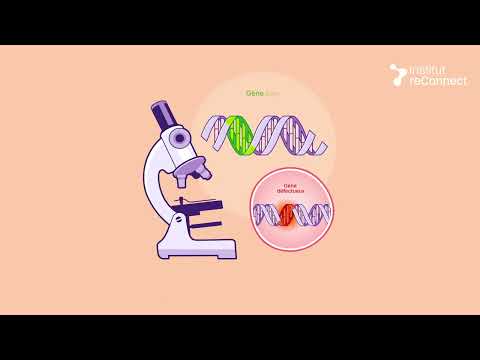
Today, teams at the reConnect Institute are contributing to the development of this technology, particularly as part of the HearConnex clinical trial. This trial aims to evaluate the safety and efficacy of the SENS-601 gene therapy product, which is based on an AAV (adeno-associated virus) vector.
Developed by Sensorion, in collaboration with Prof. Christine Petit’s laboratory (reConnect Institute, Hearing Institute, Institut Pasteur, Inserm, CNRS), this program aims to treat hearing loss caused by mutations in the GJB2 gene. This gene encodes connexin 26 and plays an essential role in maintaining the ionic balance necessary for sound transduction in the inner ear. Mutations in this gene are the leading cause of genetic congenital deafness, DFNB1A, which accounts for approximately 50% of cases of autosomal recessive non-syndromic congenital hearing loss—that is, deafness present at birth and without any other major symptoms.
Recent research has also shown that mutations in the GJB2 gene are found in early-onset forms of severe age-related hearing loss in adults, which appear to be monogenic and potentially treatable with gene therapy.
SENS 601 is expected to enter clinical evaluation in the Phase I/II HearConnex trial—currently being conducted in children with DFNB1A congenital hearing loss—by early 2027. In the absence of an approved gene therapy for GJB2-related hearing loss, SENS-601 could have the potential to be among the first gene therapy programs targeting GJB2 gene mutations, if approved.
This program, partially funded by the French government as part of the France 2030 investment plan (the ConnexGene project, in partnership with Bpifrance), is being developed in collaboration with the reConnect Institute.


